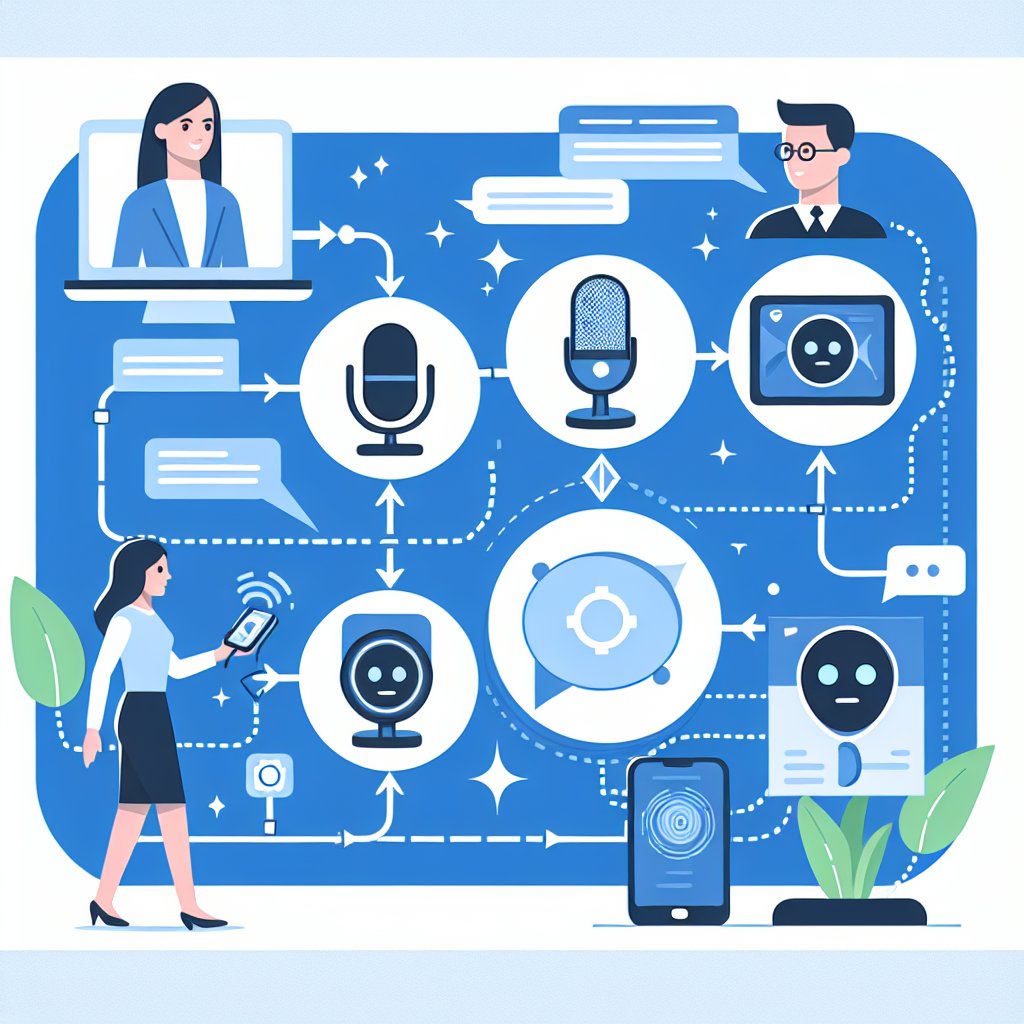
In "The Future of Conversation: How AI Voice Agents Are Revolutionizing Communication," we dive into the transformative world of AI-powered voice technology. From virtual assistants like Siri and Alexa to advanced voice agents reshaping customer service, healthcare, and entertainment, this blog explores how these intelligent systems are redefining the way we interact with machines—and each other. Discover the latest innovations, real-world applications, and the ethical considerations shaping this rapidly evolving field. Whether you're a tech enthusiast or a business leader, join us as we uncover how AI voice agents are turning science fiction into everyday reality.
You’ve got a website. Maybe you’ve even got a decent amount of traffic coming in. But your phone isn’t ringing and your inbox is quiet. Sound familiar?
Here’s the hard truth: most local business websites aren’t built to capture leads. They’re built to exist. There’s a big difference.
In this post I’m going to break down exactly what separates a website that generates enquiries on autopilot from one that just sits there looking pretty.
Most websites attract traffic — but fail to convert it into leads.
The Problem With Most Business Websites
Most websites are basically online brochures. They tell people who you are, what you do, and maybe show a few photos. Then they throw a “Contact Us” page at the bottom and hope for the best.
That’s not a lead generation system. That’s a digital leaflet.
The average visitor spends less than a minute on a website before making a decision. If your site doesn’t grab their attention, build enough trust, and give them a clear next step within that window — they’re gone. Back to Google. On to your competitor.
What a High-Converting Website Actually Does
A site that properly captures leads does three things well:
1. It speaks directly to one person’s problem
Generic copy kills conversions. “Welcome to Smith & Sons Law Firm — serving clients since 1998” tells me nothing useful. Compare that to: “Had an accident that wasn’t your fault? We’ll tell you exactly where you stand — free, no obligation.”
One of those makes me want to keep reading. The other makes me close the tab. Know who you’re talking to. Know what keeps them up at night. Write for that person.
2. It has one clear call to action
Too many options = no decision. Your site should be guiding visitors toward a single primary action. Whether that’s booking a call, filling in a quote form, or grabbing a free guide — pick one thing and make it impossible to miss.
Stop burying your CTA at the bottom of a wall of text. Put it above the fold. Repeat it. Make the button copy specific — “Get My Free Quote” beats “Submit” every time.
Capturing contact details before visitors leave is the difference between a lead and a lost visitor.
3. It captures contact details before they leave
Most visitors aren’t ready to buy on their first visit. So if you’re not collecting their details, you lose them forever.
A simple lead magnet changes the game. A free guide, a checklist, a short video, a discount — something valuable enough that they’ll hand over their email address in exchange. Now you’ve got a way to follow up, nurture, and convert them later.
Funnels vs. Websites — What’s the Difference?
A funnel is a focused, stripped-back version of a website page. No navigation menu. No distractions. Just one message, one offer, one action.
Where a website serves multiple purposes, a funnel has one job: convert. For lead generation, a simple funnel looks like this:
Landing page — headline that nails the problem, a few bullet points of benefits, a form or button
Thank you page — confirms they’ve signed up, sets expectations, maybe offers something else
Follow-up sequence — automated emails that build trust and move them toward a sale
That’s it. Nothing fancy. But a well-built funnel will outperform a standard website contact form almost every time because there’s zero friction and zero distraction.
A focused funnel removes distraction and guides visitors toward one outcome.
The Fastest Wins for More Leads Right Now
If you’re not ready to build a full funnel from scratch, here’s where to start:
Add a pop-up or slide-in form with a lead magnet offer on your highest-traffic pages
Replace your generic contact page with a short qualifying form (name, email, what they need, best time to call)
Put a sticky header bar on your site with your phone number and a “Book a Free Consultation” button
Add a live chat or chatbot — even a simple one captures leads from visitors who won’t fill in a form
Use a calendar booking tool like Calendly so visitors can schedule directly without the back-and-forth
Each of these is something you can implement this week without rebuilding your whole site.
What Happens After the Lead Comes In
Automated follow-up means every lead gets a fast, personalised response — without you lifting a finger.
Capturing the lead is step one. What happens next is where most businesses drop the ball.
Speed matters. Studies show that responding to a lead within five minutes makes you 21x more likely to qualify them compared to responding after 30 minutes. Most businesses take hours, or don’t follow up at all.
The fix? Automate your follow-up. The moment someone fills in your form, they should get an instant confirmation email or text. Then a sequence of follow-ups that keep you front of mind until they’re ready to buy or they tell you to stop.
This is where tools like CRM systems and AI automation come in — making sure every lead gets a fast, personalised response without you having to manually chase every single one.
Wrapping Up
Getting more leads from your website isn’t about flashy design or spending a fortune on ads. It’s about understanding what your visitors need, removing the friction, and giving them a clear reason to take the next step.
Start with one change. Test it. Then build from there.
If you want help setting this up for your business — whether that’s a properly optimised website, a lead capture funnel, or automated follow-up — get in touch and we’ll have a look at what you’ve got and where the gaps are.
Smart Process AI helps local service businesses generate and capture more leads through smarter automation and better-converting websites. Book a free strategy call to see what’s possible.
Think about the last time a potential customer visited your website late at night, had a quick question, and couldn’t get an answer. They probably closed the tab — and went straight to a competitor. Your website doesn’t have to let that happen.
The most successful small businesses today aren’t just using their websites as online brochures. They’re turning them into 24/7 sales and service machines — capturing leads, booking appointments, following up on missed calls, and building a five-star reputation, all without the owner lifting a finger.
In this post, we’re breaking down five smart website features that are completely changing the game for local business owners. Whether you run a salon, a law firm, a plumbing company, or a dental practice — these automations work for you around the clock, even when you’re with customers, at dinner, or fast asleep.
The Problem With Most Small Business Websites
Here’s a hard truth: most small business websites are passive. They sit there, look nice, and wait for someone to pick up the phone. But today’s customers expect instant responses. According to research from Drift, 82% of consumers say getting an immediate response is very important when they have a question. If your website can’t deliver that, you’re leaving money on the table every single day.
The good news? You don’t need to hire more staff or stay glued to your phone. The right smart website tools handle all of this automatically. Let’s look at the five most powerful ones.
1. Live Chat Widget — Be There for Every Visitor, Any Time of Day
A live chat widget is like having a friendly receptionist on your website 24 hours a day. When a visitor lands on your page and has a question — about your pricing, your availability, whether you service their area — the chat widget is right there to help them in real time.
Modern chat widgets powered by AI can answer your most commonly asked questions automatically, without you ever having to type a word. They can collect visitor details, qualify leads, and even route serious inquiries directly to you during business hours. Outside of business hours? The bot holds down the fort, gathers the contact info, and makes sure nothing falls through the cracks.
Here’s why this matters: studies consistently show that website visitors who engage with live chat are three times more likely to convert into paying customers than those who don’t. Simply having the chat widget visible increases trust and signals to visitors that there’s a real, responsive business behind the website.
For small businesses, this is one of the easiest wins available. You set it up once, write a handful of automated responses to your most common questions, and let it run. Your website starts working harder the moment it’s live.
2. Smart Contact Form — Stop Losing Leads After They Reach Out
Almost every business website has a contact form. But here’s the difference between a basic contact form and a smart contact form: what happens after someone hits “Submit.”
With a basic contact form, the visitor’s message lands in your inbox and sits there until you get around to replying — which, if you’re running a busy business, might be hours or even days later. By then, that potential customer has already found someone else.
A smart contact form triggers an automated follow-up sequence the moment someone submits. The visitor instantly receives a confirmation email or text message acknowledging their enquiry, letting them know you’ve received their message and when to expect a reply. Behind the scenes, you get an alert. And if you don’t follow up within a set window, the system can send a gentle reminder to check back in with the prospect.
You can also use smart forms to gather more useful information upfront — their budget range, the type of service they need, their preferred contact method — so that by the time you do speak to them, you’re already prepared to have a productive conversation. No more playing phone tag just to get basic details.
The result is a system where no lead ever goes cold because of a slow response. Your follow-up is consistent, professional, and immediate — every single time.
3. Appointment Booking System — End the Back-and-Forth Forever
If your business relies on appointments — consultations, fittings, assessments, treatments, or any kind of scheduled service — then an online booking system built into your website is a game changer.
Think about how bookings typically work without one. A customer wants to schedule a time. They call your number. You’re busy, so they leave a voicemail. You call back. They don’t answer. You play phone tag for two days before finally landing on a time. By that point, some customers have already given up and gone elsewhere — and you’ve wasted 20 minutes of your day on something that should have taken 2 minutes.
An integrated online booking system lets customers see your real-time availability and book a slot themselves, 24 hours a day, 7 days a week. No phone tag. No waiting. No friction. As soon as they book, both you and the customer receive a confirmation. A reminder is automatically sent 24 hours before the appointment — and again one hour before, if you like — which dramatically reduces no-shows.
The system syncs with your calendar so you never get double-booked, and you can set your own availability, buffer times between appointments, and block out days off. Some systems even allow customers to reschedule or cancel themselves, saving you even more admin time.
What this does for your business is simple but profound: it removes the friction between “interested” and “booked.” The easier you make it for someone to take the next step, the more of them will actually do it. And more booked appointments means more revenue.
4. Missed Call Text Back — Because a Missed Call Doesn’t Have to Mean a Lost Customer
Here’s one of the most powerful — and most underrated — automations available to small business owners today: the missed call text back.
It works like this. A potential customer calls your business number. You’re with a client, on another call, or simply unavailable. They hear your voicemail and — let’s be real — most of them don’t leave a message. They hang up and try the next business on their list. That call, and that revenue, is gone.
With missed call text back, the moment someone’s call goes unanswered, they automatically receive a text message — usually within seconds — that reads something like: “Hi! Sorry we missed your call. We’d love to help. What can we assist you with today?”
This single automation can recapture a huge percentage of leads that would otherwise be lost. Texting is the communication channel people are most comfortable with — most texts are read within three minutes of being received. By opening a text conversation, you keep the potential customer engaged, gather their details, and bring them back into your sales process.
Many businesses report that this one feature alone recovers dozens of lost leads every month. When you consider the lifetime value of a loyal customer, the return on investment is remarkable. If you only implemented one automation from this list, missed call text back might just be the one to start with.
5. Reputation Management Automations — Let Your Happy Customers Do the Marketing for You
If you want to win local customers in 2025 and beyond, your Google reviews are one of your most powerful assets. Research shows that 93% of consumers read online reviews before making a purchasing decision, and businesses with a higher volume of positive reviews consistently outrank their competitors in local search.
The challenge? Most satisfied customers don’t leave reviews unless you ask them — and asking every single customer manually is exhausting and easy to forget. This is where reputation management automation changes everything.
After a customer completes a purchase, appointment, or service, an automated review request is sent to them via text or email. The message is friendly, personal, and includes a direct link to your Google review page — so it literally takes them 30 seconds to leave a five-star review. The timing is perfect: they’re still riding the high of a great experience.
Beyond gathering reviews, reputation management tools help you monitor what’s being said about your business across platforms, alert you when a new review comes in, and even help you craft professional responses to both positive and negative feedback. Responding to reviews — especially negative ones — demonstrates that you care about your customers and are actively engaged with your community.
The cumulative effect is powerful. Businesses that consistently generate fresh, positive reviews become the obvious first choice for new customers searching locally. Your reputation becomes a self-sustaining, always-on marketing engine — and all it takes is a simple automated message sent at the right moment.
Putting It All Together: Your Website as a 24/7 Business Growth Engine
Each of these five features is powerful on its own. But when you bring them all together on a single smart website, the effect is transformative. Visitors get instant responses via live chat. Enquiries are followed up automatically. Appointments are booked without any back-and-forth. Missed calls don’t become lost customers. And your happy clients are quietly building your five-star reputation every single day.
This is the new standard for small business websites — and the businesses that adopt these tools now are the ones that will dominate their local market over the next few years. The beauty of it is that once the systems are set up, they run largely on autopilot. You get to focus on delivering great work while your smart website handles the rest.
The question isn’t whether your business needs these features. The question is: how many leads and customers are you losing right now without them?
Ready to Transform Your Website Into a Smart Business Machine?
At Smart Process AI, we build websites with all of these features built in and fully configured — chat widgets, smart contact forms, online booking, missed call text back, and reputation management, all working together seamlessly from day one.
Whether you’re starting from scratch or want to upgrade an existing site, we’d love to show you what’s possible for your specific business. Book a free discovery call today and let’s talk about turning your website into your hardest-working team member.
AI Agents and Automation Trends 2026: The Enterprise Revolution Is Here
The artificial intelligence landscape is undergoing a seismic shift. We’re moving beyond simple chatbots and recommendation engines into an era where autonomous AI agents are fundamentally transforming how businesses operate. By 2026, these intelligent systems won’t just assist human workers—they’ll independently manage complex workflows, collaborate with other agents, and make decisions that drive measurable business outcomes.
The numbers tell a compelling story. The AI agents market is exploding from $8.29 billion in 2025 to a projected $12.06 billion in 2026, representing a staggering 45.5% compound annual growth rate. This isn’t incremental progress—it’s a wholesale reimagining of enterprise automation. As organizations race to implement agentic AI trends, the question is no longer whether to adopt these technologies, but how quickly you can integrate them before your competitors do.
For business leaders, technologists, and decision-makers, understanding the AI agents 2026 landscape isn’t optional—it’s essential for survival. This comprehensive guide explores the most critical automation trends reshaping the business world and provides actionable insights for navigating this transformation.
[IMAGE_PLACEHOLDER – Featured image showing AI agents collaborating in a modern enterprise environment]
The Explosive Growth of the AI Agent Market
The financial momentum behind agentic automation speaks volumes about its transformative potential. In just the first half of 2025, investors poured over $2.8 billion into Agentic AI funding, signaling unprecedented confidence in this technology’s future.
This investment surge isn’t speculative hype—it’s driven by tangible results. Organizations implementing AI agents are seeing dramatic improvements in operational efficiency, customer satisfaction, and bottom-line performance. The technology has matured from experimental prototypes to production-ready solutions that deliver measurable ROI.
What’s Driving AI Agent Market Growth?
Several converging factors are accelerating the adoption of autonomous AI workflows across industries:
Advanced language models have given agents unprecedented ability to understand context, communicate naturally, and reason through complex scenarios. These capabilities make AI agents far more versatile than previous automation technologies.
Cloud infrastructure maturity now provides the scalable computing power needed to run sophisticated multi-agent systems without prohibitive costs. Organizations can deploy agent networks that would have been economically unfeasible just two years ago.
Integration ecosystem expansion means AI agents can now seamlessly connect with existing enterprise systems, from CRM platforms to supply chain management tools. This interoperability eliminates the integration barriers that previously hindered automation projects.
[IMAGE_PLACEHOLDER – Infographic showing AI agent market growth statistics and projections]
Enterprise Applications: The 40% Embedding Milestone
Key concept visualization
Key concept visualization
Perhaps the most significant indicator of mainstream adoption is this projection: by 2026, 40% of enterprise applications will embed task-specific AI agents, up from low single-digits today. This represents a fundamental shift in how software is designed and delivered.
Traditional enterprise software required humans to initiate actions, input data, and make decisions. The new generation of applications comes with built-in AI agents that proactively handle routine tasks, identify opportunities, and execute complex processes with minimal human intervention.
Real-World Applications Across Industries
Customer service platforms are leading the charge. By 2028, 70% of customers will use conversational AI for customer service journeys, handling everything from simple inquiries to complex problem resolution. These agents don’t just answer questions—they understand customer intent, access relevant data across systems, and orchestrate solutions.
Financial services are deploying AI agents for fraud detection, risk assessment, and personalized financial planning. These agents continuously monitor transactions, identify anomalies, and take preventive actions in real-time—operating at speeds and scales impossible for human teams.
Supply chain management benefits from agents that autonomously optimize inventory levels, predict disruptions, and coordinate logistics across global networks. One agent might monitor weather patterns while another tracks shipping routes, collaborating to reroute shipments before delays occur.
Human resources departments are using AI agents to screen candidates, schedule interviews, onboard new employees, and answer policy questions. This frees HR professionals to focus on strategic initiatives like culture development and talent strategy.
Multi-Agent Systems: The Power of Specialized Collaboration
The future of enterprise automation isn’t single, all-knowing AI systems—it’s networks of specialized agents working together. By 2027, 70% of multi-agent systems will have agents with narrow, focused roles, mirroring how human organizations structure teams around specialized expertise.
This architectural approach offers significant advantages over monolithic AI systems. Specialized agents become experts in their domains, delivering higher accuracy and more nuanced decision-making. When issues arise, organizations can update or replace individual agents without disrupting the entire system.
How Multi-Agent Systems Work
Think of multi-agent systems as digital organizations. A sales agent might identify qualified leads, then hand off to a product specialist agent that recommends solutions based on customer needs. A pricing agent calculates optimal quotes while a contract agent generates agreements. Finally, an onboarding agent ensures smooth implementation.
These agents communicate through standardized protocols, sharing information and coordinating actions. They negotiate priorities, resolve conflicts, and adapt to changing circumstances—all without human intervention for routine scenarios.
The emergence of federated AI agents takes this concept further. These agents can operate across organizational boundaries, enabling automated B2B transactions, supply chain coordination, and partner ecosystem management. Imagine your procurement agent negotiating directly with a supplier’s sales agent, finding optimal terms for both parties in seconds.
[IMAGE_PLACEHOLDER – Diagram illustrating multi-agent system architecture and agent collaboration]
Reinventing Operating Models for Agentic AI
Process or workflow illustration
Process or workflow illustration
Here’s a sobering statistic: 78% of executives say they must reinvent operating models for agentic AI value. Simply deploying AI agents into existing processes won’t unlock their full potential. Organizations need fundamental transformations in how they structure work, make decisions, and measure success.
The Operating Model Transformation
Process redesign is the first imperative. Legacy processes were designed around human capabilities and constraints. Agentic automation enables entirely new workflows that leverage AI speed, consistency, and analytical power. Leading organizations are conducting comprehensive process audits to identify opportunities for agent-driven transformation.
Decision rights evolution requires clarity about which decisions AI agents can make autonomously versus which require human judgment. This isn’t just about technical capabilities—it involves legal, ethical, and strategic considerations. Smart organizations are developing decision frameworks that empower agents while maintaining appropriate oversight.
Talent strategy shifts as AI agents handle routine tasks. The workforce of 2026 focuses on higher-value activities: strategic planning, creative problem-solving, relationship building, and agent oversight. This requires significant investment in reskilling programs and organizational change management.
Performance metrics must evolve beyond traditional KPIs. How do you measure agent effectiveness? What constitutes successful human-agent collaboration? Organizations are developing new frameworks that capture the unique value AI agents deliver.
Governance-as-Code AI: Managing Risk at Scale
As AI agents gain autonomy, governance becomes paramount. The emerging paradigm of governance-as-code AI embeds compliance rules, ethical guidelines, and risk parameters directly into agent behavior.
Rather than relying on post-hoc audits, governance-as-code ensures agents operate within defined boundaries from the start. If an agent encounters a scenario outside its authorization, it automatically escalates to human decision-makers or consults specialized governance agents.
Key Governance Considerations
Transparency and explainability remain critical. Organizations need clear audit trails showing why agents made specific decisions. This is essential for regulatory compliance, troubleshooting issues, and building stakeholder trust.
Security and privacy take on new dimensions when autonomous agents access sensitive data and execute transactions. Robust authentication, authorization, and data protection mechanisms are non-negotiable.
Bias monitoring and mitigation ensures agents don’t perpetuate or amplify unfair outcomes. Regular testing, diverse training data, and ongoing monitoring help maintain ethical AI operations.
Version control and testing protocols ensure agent updates don’t introduce unexpected behaviors. Leading organizations treat AI agents like mission-critical software, with rigorous development, testing, and deployment processes.
[IMAGE_PLACEHOLDER – Flowchart showing governance-as-code AI framework and decision processes]
Autonomous AI Workflows: From Concept to Reality
The promise of autonomous AI workflows is finally being realized at scale. These are end-to-end processes where AI agents handle every step, from initiation through completion, with human involvement only for exceptions or strategic decisions.
Consider invoice processing: An agent receives invoices via email, extracts relevant data, matches line items to purchase orders, identifies discrepancies, communicates with vendor agents to resolve issues, routes approvals through the appropriate chain, schedules payments, and updates financial systems. The entire process runs 24/7 with near-perfect accuracy.
Building Effective Autonomous Workflows
Start with high-volume, rules-based processes where agents can deliver immediate value. These quick wins build organizational confidence and provide learning opportunities before tackling more complex workflows.
Design for human-agent collaboration rather than complete automation. The most effective workflows leverage AI for speed and consistency while preserving human judgment for nuanced decisions.
Implement robust monitoring and alerting so teams can quickly identify and address issues. Autonomous doesn’t mean unmonitored—it means self-executing within defined parameters.
Plan for continuous improvement by analyzing agent performance data, gathering user feedback, and regularly updating agent capabilities. The best autonomous workflows evolve over time.
Preparing Your Organization for the AI Agent Revolution
The transition to agentic AI requires strategic planning and committed execution. Here are actionable steps to position your organization for success in 2026 and beyond:
1. Conduct an AI Agent Readiness Assessment
Evaluate your current automation maturity, data infrastructure, and organizational readiness. Identify processes that are prime candidates for agentic automation based on volume, complexity, and business impact.
2. Develop a Phased Implementation Roadmap
Resist the temptation to automate everything at once. Start with pilot projects that demonstrate value, build organizational capability, and generate momentum for broader adoption.
3. Invest in Data Infrastructure
AI agents are only as good as the data they access. Ensure your data is clean, well-organized, and accessible. Implement data governance frameworks that support both human and agent users.
4. Build Cross-Functional AI Agent Teams
Successful implementations require collaboration between IT, business units, legal, compliance, and other stakeholders. Create dedicated teams with clear accountability for agent development and deployment.
5. Prioritize Change Management and Training
The human side of AI agent adoption is often more challenging than the technical implementation. Invest in comprehensive training programs, clear communication, and support structures that help employees adapt to new ways of working.
6. Establish Governance Frameworks Early
Don’t wait until you have dozens of agents deployed to think about governance. Establish clear policies, oversight mechanisms, and ethical guidelines from the start.
The Competitive Imperative
Organizations that successfully harness agentic AI trends will enjoy substantial competitive advantages: faster operations, lower costs, better customer experiences, and more strategic use of human talent. Those that delay risk being left behind by more agile competitors.
The AI agents 2026 landscape represents both tremendous opportunity and significant challenge. The technology is ready. The market is growing explosively. The question is whether your organization is prepared to seize this moment.
Conclusion: Your AI Agent Journey Starts Now
The transformation to agentic automation isn’t a distant future scenario—it’s happening right now. With the AI agent market growing at 45.5% annually and 40% of enterprise applications embedding AI agents by 2026, the window for competitive advantage is rapidly closing.
The organizations that will thrive in this new landscape are those that act decisively today. They’re reimagining operating models, investing in multi-agent systems, implementing governance-as-code AI, and building the capabilities needed for autonomous AI workflows.
The AI agent revolution won’t wait for those who hesitate. Start your journey today by assessing your readiness, identifying high-impact use cases, and developing a strategic implementation roadmap. The future of enterprise automation is autonomous, intelligent, and collaborative—and it’s arriving faster than most organizations realize.
Are you ready to lead in the age of AI agents, or will you be racing to catch up? The choice you make today will determine your competitive position for years to come.
Ready to explore how AI agents can transform your organization? Download our comprehensive AI Agent Implementation Guide or schedule a consultation with our automation experts to develop your customized roadmap for 2026 and beyond.
The Future of AI Automation in Business: How Agentic AI Will Transform Operations by 2026
The business landscape is on the brink of its most significant transformation yet. While we’ve witnessed AI’s evolution from simple chatbots to sophisticated language models, the next wave promises something far more revolutionary: autonomous AI agents that think, collaborate, and execute complex tasks without human intervention.
This isn’t science fiction—it’s happening right now. Companies implementing AI agents are already reporting 30–50% operational efficiency gains and substantially lower costs. But here’s the challenge: 78% of executives acknowledge they’ll need to completely reinvent their operating models to capture agentic AI’s full value. The question isn’t whether your business will adopt AI automation, but whether you’ll lead the transformation or scramble to catch up.
In this comprehensive guide, we’ll explore the cutting-edge AI automation trends shaping 2026 and beyond, examine real-world applications across industries, and provide actionable strategies to position your organization at the forefront of this revolution.
[IMAGE_PLACEHOLDER – Featured image showing AI agents collaborating in a business environment]
Understanding Agentic AI: The Next Evolution in Business Automation
What Makes Agentic AI Different?
Traditional automation follows rigid, pre-programmed rules—if X happens, do Y. Agentic AI business solutions represent a fundamental paradigm shift. These intelligent systems can perceive their environment, make autonomous decisions, learn from outcomes, and adapt their strategies in real-time.
Think of agentic AI as hiring a highly skilled employee who never sleeps, continuously improves, and can handle thousands of tasks simultaneously. Unlike conventional AI workflow automation tools that require constant human oversight, agentic systems operate independently within defined parameters, escalating to humans only when necessary.
The Rise of Multi-Agent Systems
Perhaps the most exciting development in intelligent automation is the emergence of multi-agent systems (MAS). Rather than relying on a single AI to handle complex processes, organizations are deploying collaborative networks of specialized agents.
These systems are already in production across industries. In healthcare, multi-agent systems coordinate between diagnostic AI, treatment planning algorithms, and operational management tools to streamline patient care. In manufacturing, agent networks manage supply chains, predict maintenance needs, and optimize production schedules simultaneously.
The collaborative nature of these systems mirrors how human teams function—each agent brings specialized expertise, and together they solve problems no single system could address alone.
[IMAGE_PLACEHOLDER – Diagram illustrating multi-agent system collaboration]
Current State of AI Automation: 2025 Landscape
Key concept visualization
Key concept visualization
Adoption Rates and Market Penetration
The adoption curve for AI automation is steeper than any previous technological revolution. Gartner’s research reveals that by 2028, 33% of enterprise software applications will include agentic capabilities for autonomous tasks—a remarkable penetration rate for an emerging technology.
Even more striking, IDC forecasts that by 2030, 45% of organizations will orchestrate AI agents at scale across multiple business functions. We’re not talking about isolated pilot projects; we’re witnessing enterprise-wide transformation.
Industry-Specific Applications
Financial Services: Human-centered conversational AI in banking currently resolves up to 80% of customer inquiries autonomously. This figure is expected to exceed 90% by 2026 as systems develop more sophisticated empathy and contextual understanding.
Customer Service: Generative AI business applications are revolutionizing support operations, handling everything from simple FAQs to complex troubleshooting scenarios with natural, context-aware conversations.
Operations and Logistics: AI agents now manage inventory optimization, route planning, and demand forecasting with minimal human intervention, adapting strategies based on real-time market conditions.
Human Resources: From candidate screening to onboarding automation, AI agents are transforming talent acquisition while reducing bias and improving candidate experience.
Six Game-Changing Trends Shaping AI Automation in 2026
1. Democratization of Agentic Automation
The barrier to entry for AI automation is collapsing rapidly. By 2026, every company—regardless of size—will have access to scalable agentic automation through vertical-specific solutions and centralized control planes.
This democratization means small businesses will wield the same AI capabilities previously exclusive to tech giants. Cloud-based platforms are packaging sophisticated AI agents into industry-specific solutions that require minimal technical expertise to deploy.
2. AI Superfactories: The Infrastructure Revolution
The computing infrastructure supporting AI is undergoing a radical transformation. We’re shifting from isolated data centers to what industry leaders call “AI superfactories”—globally interconnected systems that optimize computing resources across massive, distributed networks.
These superfactories enable the real-time processing power necessary for complex multi-agent systems to function seamlessly across continents, dramatically reducing latency and improving response times.
[IMAGE_PLACEHOLDER – Visualization of AI superfactory network infrastructure]
3. The Shadow AI Phenomenon
An unexpected trend is emerging in enterprises: employees independently creating AI use cases without formal IT oversight—a phenomenon known as “Shadow AI.” While this grassroots adoption accelerates innovation, it presents significant governance challenges.
Progressive organizations are addressing this by integrating employee-driven AI initiatives with existing ERP systems and establishing clear governance frameworks that encourage innovation while maintaining security and compliance standards.
4. Sustainability Becomes Non-Negotiable
As AI systems scale, their environmental impact has moved from peripheral concern to strategic priority. Forward-thinking IT leaders are building comprehensive metrics to measure and optimize the environmental footprint of their AI operations.
The future of automation in 2026 will balance three critical factors: processing speed, operational cost, and eco-friendliness. Organizations that master this balance will gain competitive advantages in both efficiency and corporate responsibility.
5. Advanced Conversational AI with Emotional Intelligence
The next generation of conversational AI transcends simple question-answering. These systems demonstrate genuine empathy, understand nuanced context, and adapt their communication style to individual users.
This human-centered approach is why customer inquiry resolution rates are projected to exceed 90% by 2026. The AI doesn’t just provide answers—it understands frustration, recognizes urgency, and responds with appropriate emotional intelligence.
6. Enterprise-Wide Agent Orchestration
Individual AI agents are powerful, but orchestrated agent ecosystems are transformative. Organizations are building centralized platforms that coordinate dozens or hundreds of specialized agents across departments, creating unprecedented operational synergy.
These orchestration platforms ensure agents share learnings, avoid redundant work, and maintain consistent decision-making aligned with corporate objectives.
Measuring Success: Intelligent Automation ROI
Process or workflow illustration
Process or workflow illustration
Quantifiable Benefits
The business case for AI automation is compelling. Organizations implementing comprehensive AI agent strategies report:
30–50% operational efficiency gains through process optimization and reduced manual intervention
Significant cost reductions in labor-intensive operations
Improved accuracy and consistency in decision-making processes
Enhanced customer satisfaction through faster, more personalized service
Accelerated innovation cycles as human talent focuses on strategic initiatives
Beyond Cost Savings
While efficiency and cost reduction dominate initial ROI discussions, forward-thinking organizations recognize deeper value propositions. AI automation enables business models previously impossible at scale—hyper-personalization for millions of customers, real-time market adaptation, and predictive problem-solving before issues impact operations.
The true competitive advantage lies not in doing the same things cheaper, but in doing entirely new things that create market differentiation.
[IMAGE_PLACEHOLDER – Infographic showing ROI metrics and business impact]
Navigating Challenges: Governance, Integration, and Change Management
Establishing Robust Governance Frameworks
The rapid proliferation of AI agents—particularly through Shadow AI—demands sophisticated governance structures. Successful organizations are implementing:
Clear accountability models defining who owns which AI systems and their outputs
Ethical guidelines ensuring AI decisions align with corporate values and regulatory requirements
Security protocols protecting sensitive data processed by autonomous agents
Audit trails maintaining transparency in AI decision-making processes
Integration with Legacy Systems
Most organizations operate hybrid environments combining cutting-edge AI with decades-old legacy systems. The integration challenge is substantial but surmountable through API-first architectures, middleware solutions, and phased migration strategies.
The key is avoiding the temptation to rip and replace. Successful AI automation strategies wrap legacy systems with intelligent agents that extract value from existing investments while building toward future-ready architectures.
Managing the Human Element
Technology transformation fails without people transformation. The shift to AI automation requires comprehensive change management addressing:
Skill development: Reskilling workforces to collaborate effectively with AI agents
Role evolution: Redefining jobs to focus on strategic thinking, creativity, and complex problem-solving
Cultural adaptation: Building organizational cultures that embrace AI as a collaborative tool rather than a replacement threat
Organizations that invest equally in technology and people consistently outperform those focused solely on technical implementation.
Practical Steps: Your AI Automation Roadmap for 2026
Phase 1: Assessment and Strategy (Months 1-3)
Begin by conducting a comprehensive audit of business processes identifying high-value automation opportunities. Prioritize use cases offering:
Clear ROI metrics
Minimal integration complexity
Significant process pain points
High transaction volumes
Develop a multi-year AI automation strategy aligned with broader business objectives, securing executive sponsorship and cross-functional buy-in.
Phase 2: Pilot Implementation (Months 4-9)
Launch focused pilot projects in controlled environments. Start with business process automation AI applications in non-critical areas, allowing teams to learn without risking core operations.
Measure everything. Establish baseline performance metrics before implementation and track improvements rigorously. Use pilot learnings to refine your approach before scaling.
Phase 3: Scale and Orchestrate (Months 10-18)
Based on pilot success, expand AI agent deployment across departments. This is where multi-agent systems and orchestration platforms become critical—ensuring agents work cohesively rather than creating new silos.
Implement centralized governance and monitoring, establishing centers of excellence that support AI initiatives across the organization.
Phase 4: Continuous Optimization (Ongoing)
AI automation isn’t a destination—it’s a continuous journey. Establish feedback loops ensuring agents continuously learn and improve. Stay current with emerging AI automation trends, regularly evaluating new capabilities against business needs.
Build innovation capacity into your organizational structure, dedicating resources to exploring next-generation applications before they become mainstream requirements.
Looking toward 2026 and beyond, several transformative developments appear inevitable:
Ubiquitous AI Agents: Every business application will include some form of agentic capability. The question won’t be whether to use AI automation, but which agents to deploy for which functions.
Seamless Human-AI Collaboration: The distinction between human and AI work will blur as interfaces become more intuitive and agents better understand human context, preferences, and working styles.
Industry Convergence: AI automation will erase traditional industry boundaries as similar agent architectures solve analogous problems across sectors, accelerating cross-industry innovation.
Regulatory Maturity: Governments and industry bodies will establish clearer frameworks governing AI deployment, creating standardized compliance requirements that actually facilitate rather than hinder adoption.
Preparing for the Unknown
While we can project trends with reasonable confidence, the pace of AI innovation guarantees surprises. The organizations that thrive will be those that build adaptive capacity—the ability to quickly evaluate, pilot, and scale new AI capabilities as they emerge.
This requires maintaining flexible architectures, cultivating learning cultures, and resisting the temptation to over-optimize current solutions at the expense of future readiness.
Conclusion: The Time to Act Is Now
The future of AI automation in business isn’t approaching—it’s here. The statistics are unambiguous: organizations embracing agentic AI are achieving transformative results, while those hesitating risk falling irreversibly behind.
The 78% of executives who recognize they must reinvent their operating models understand a fundamental truth: AI automation isn’t about incremental improvement; it’s about fundamental transformation. The 30–50% efficiency gains represent just the beginning of what’s possible as multi-agent systems, advanced orchestration, and human-centered AI mature over the coming years.
Your Next Steps
Don’t wait for perfect clarity or complete certainty. Start your AI automation journey today:
Identify one high-impact process suitable for AI agent deployment
Assemble a cross-functional team combining business expertise and technical capability
Launch a focused pilot with clear success metrics
Learn, iterate, and scale based on results
The organizations defining the future of business won’t be those with the largest AI budgets or the most advanced technical teams. They’ll be those that start now, learn quickly, and adapt continuously.
The question isn’t whether AI automation will transform your industry—it will. The question is whether you’ll lead that transformation or be transformed by it. The choice, and the opportunity, is yours.
Ready to begin your AI automation journey? Start by assessing your current processes and identifying your highest-value automation opportunity today.
The Rise of Agentic AI: How Microsoft Copilot Cowork Is Transforming Digital Workers From Simple Chatbots to Autonomous Agents
The artificial intelligence landscape is experiencing a seismic shift. For years, we’ve interacted with AI through chatbots—helpful assistants that respond to our questions but require constant direction. Now, we’re entering the era of Agentic AI, where digital workers don’t just answer questions; they independently execute complex tasks, make decisions, and orchestrate entire workflows without human intervention.
Microsoft’s latest innovation, Copilot Cowork, represents this evolutionary leap forward. Announced as part of the company’s expanding AI ecosystem, Copilot Cowork introduces autonomous AI agents that function as true digital colleagues rather than passive tools. These agents don’t wait for instructions—they proactively complete multi-step tasks, coordinate with other systems, and deliver results while you focus on strategic work.
This transformation from chatbots to agents isn’t just a technological upgrade; it’s a fundamental reimagining of how we work alongside artificial intelligence. Let’s explore what this shift means for businesses, productivity, and the future of work itself.
[IMAGE_PLACEHOLDER – Featured image showing AI agents working alongside humans in a modern office environment]
Agentic AI represents a paradigm shift from reactive to proactive artificial intelligence. Unlike traditional chatbots that operate within narrow conversational parameters, agentic systems possess autonomy, goal-oriented behavior, and the ability to take independent action.
Think of the difference this way: A chatbot is like an information desk clerk who answers questions when asked. An AI agent is like a personal assistant who understands your objectives, plans the steps needed to achieve them, and executes those steps across multiple platforms—all without requiring your constant supervision.
These AI digital workers leverage advanced reasoning capabilities, contextual understanding, and integration with enterprise systems to function as genuine productivity multipliers. They can break down complex requests into actionable tasks, navigate between applications, and adapt their approach based on outcomes.
The Technical Foundation of Agent Systems
The transition from chatbots to agents relies on several technological advancements. Modern agentic systems utilize large language models (LLMs) combined with orchestration frameworks that enable AI workflow execution across diverse environments.
Enterprise AI agents integrate with APIs, databases, and business applications to access information and take action. They employ reasoning chains that allow them to plan multi-step processes, evaluate results, and adjust their strategies accordingly.
This technical sophistication enables agents to handle tasks that previously required significant human oversight—from data analysis and report generation to customer service orchestration and supply chain management.
[IMAGE_PLACEHOLDER – Diagram illustrating the architecture of agentic AI systems]
Microsoft Copilot Cowork: The Next Generation of Digital Collaboration
Key concept visualization
Key concept visualization
Introducing Copilot Cowork
Microsoft Copilot Cowork represents the company’s bold entry into the agentic AI space. Built on the foundation of Microsoft 365 Copilot, Cowork extends capabilities far beyond document assistance and email drafting.
Copilot Cowork introduces autonomous agents that can be deployed across an organization to handle specialized functions. These agents operate within the Microsoft ecosystem but can also integrate with third-party applications, creating a unified intelligence layer across your entire digital workplace.
What sets Copilot Cowork apart is its emphasis on collaboration—not just between humans, but between multiple AI agents working in concert. One agent might handle data gathering while another performs analysis, and a third generates reports, all coordinating seamlessly to complete complex projects.
Work IQ: The Intelligence Behind the Agents
At the heart of Copilot Cowork lies Work IQ, Microsoft’s proprietary system for understanding organizational context, workflows, and priorities. Work IQ enables agents to make intelligent decisions based on company-specific knowledge rather than generic responses.
Work IQ learns from your organization’s communication patterns, document repositories, project histories, and operational rhythms. This contextual intelligence allows Copilot Cowork agents to understand not just what needs to be done, but how your organization prefers to work.
The result is AI task automation that feels native to your business environment rather than like an external tool bolted onto existing processes. Agents understand your terminology, respect your workflows, and adapt to your company culture.
Key Capabilities of Copilot Cowork
Microsoft Copilot Cowork offers several breakthrough capabilities that distinguish it from previous AI assistants:
Autonomous Task Execution: Agents can complete multi-step projects from initiation to delivery without human intervention
Cross-Application Orchestration: Seamlessly work across Microsoft 365 apps, third-party tools, and enterprise systems
Intelligent Prioritization: Understand urgency and importance to focus on high-value activities
Collaborative Intelligence: Multiple agents can work together on complex initiatives
Adaptive Learning: Improve performance based on feedback and organizational patterns
Compliance and Security: Operate within established governance frameworks and permission structures
These capabilities transform how organizations approach productivity, moving from task-level assistance to strategic workflow optimization.
[IMAGE_PLACEHOLDER – Screenshot showing Copilot Cowork interface with multiple agents managing different tasks]
From Chatbots to Agents: Understanding the Evolutionary Leap
The Limitations of Traditional Chatbots
Traditional chatbots, despite their utility, operate within significant constraints. They excel at answering predefined questions and following scripted conversations but struggle with ambiguity, multi-step reasoning, and independent action.
When you ask a chatbot to “prepare for tomorrow’s client meeting,” it might provide general advice or search for relevant documents. An agentic system, however, would review the client’s history, compile relevant data, create a briefing document, identify potential discussion topics, and even suggest strategic recommendations—all without further prompting.
This difference between responding and acting represents the core distinction between chatbots and AI digital workers. Agents possess agency, the ability to make decisions and take action toward defined goals.
The Agent Advantage: Autonomy and Action
From chatbots to agents represents more than incremental improvement—it’s a category transformation. Agents operate with a degree of autonomy that fundamentally changes the human-AI relationship.
Consider a sales scenario: A chatbot might help you draft an email to a prospect. An agent would monitor the sales pipeline, identify opportunities requiring attention, research each prospect’s recent activities, draft personalized outreach, schedule follow-ups, and update your CRM—all based on your sales strategy and past successful patterns.
This level of autonomous operation frees knowledge workers from routine coordination and execution tasks, allowing them to focus on strategy, creativity, and relationship-building—the distinctly human contributions that drive business value.
Real-World Applications Across Industries
Enterprise AI agents are already demonstrating value across diverse sectors:
In Healthcare: Agents coordinate patient scheduling, manage medical records, ensure compliance documentation, and flag potential care gaps—allowing medical professionals to focus on patient care rather than administrative burdens.
In Financial Services: Agents monitor transactions for anomalies, prepare regulatory reports, conduct preliminary research on investment opportunities, and maintain client communication—enhancing both efficiency and compliance.
In Manufacturing: Agents optimize supply chains by monitoring inventory levels, predicting maintenance needs, coordinating logistics, and identifying production bottlenecks before they impact operations.
In Marketing: Agents analyze campaign performance, adjust targeting parameters, generate content variations, coordinate multi-channel initiatives, and provide strategic recommendations based on real-time data.
These applications demonstrate how AI workflow execution extends beyond individual tasks to encompass entire business processes.
[IMAGE_PLACEHOLDER – Infographic showing agentic AI applications across different industries]
Implementing Agentic AI: Strategic Considerations for Organizations
Process or workflow illustration
Process or workflow illustration
Assessing Organizational Readiness
Successfully deploying Agentic AI requires more than technological implementation—it demands organizational readiness. Companies must evaluate their data infrastructure, process documentation, and cultural openness to AI collaboration.
Start by identifying workflows that involve significant coordination overhead, repetitive decision-making, or multi-system data gathering. These represent prime opportunities for agent deployment where the return on investment will be most apparent.
Ensure your data is accessible, well-organized, and properly governed. Agents are only as effective as the information they can access and the permissions they’re granted within your systems.
Building Trust Through Transparency
One challenge in transitioning from chatbots to agents is the psychological shift required when AI systems take autonomous action. Building organizational trust requires transparency about what agents are doing and why.
Microsoft Copilot Cowork addresses this through audit trails, explanation capabilities, and human oversight options. Agents can document their decision-making process, allowing teams to understand and validate their actions.
Implement gradual autonomy expansion—start with agents that recommend actions for human approval, then progressively increase their independent authority as confidence grows. This measured approach helps teams adapt to AI collaboration without overwhelming existing workflows.
Integration With Existing Systems
The power of Enterprise AI agents lies in their ability to work across your entire technology ecosystem. Successful implementation requires thoughtful integration planning.
Microsoft’s approach with Copilot Cowork leverages existing Microsoft 365 Copilot infrastructure while extending connectivity to third-party applications through APIs and connectors. This architecture minimizes disruption while maximizing capability.
Prioritize integrations that unlock the greatest value—typically your CRM, project management platforms, communication tools, and data analytics systems. Each integration exponentially increases what agents can accomplish autonomously.
Measuring Success and ROI
Quantifying the impact of AI task automation requires metrics that capture both efficiency gains and qualitative improvements. Track time saved on routine tasks, but also measure improvements in decision quality, response times, and employee satisfaction.
Organizations deploying agentic AI typically see:
30-50% reduction in time spent on routine coordination tasks
Faster response times to customer inquiries and internal requests
Improved data quality through consistent processing and validation
Enhanced employee satisfaction as workers focus on meaningful activities
Better decision-making through comprehensive information synthesis
These benefits compound over time as agents learn organizational patterns and expand their capabilities.
[IMAGE_PLACEHOLDER – Chart showing productivity improvements from agentic AI implementation]
The Future of Work: Humans and Agents as Colleagues
Redefining Productivity in the Agent Era
The rise of Agentic AI is fundamentally redefining what productivity means. In the chatbot era, productivity meant getting answers faster. In the agent era, productivity means accomplishing objectives with minimal friction.
This shift elevates human workers from task executors to strategic directors. Rather than spending hours gathering data, coordinating schedules, and managing workflows, professionals can focus on interpretation, innovation, and relationship-building.
Work IQ and similar systems are creating a future where AI understands not just individual tasks but entire job functions, enabling digital workers to handle the operational aspects while humans focus on judgment, creativity, and strategy.
Ethical Considerations and Human Oversight
As AI systems gain autonomy, ethical considerations become paramount. Organizations must establish clear guidelines about when agents can act independently versus when human judgment is required.
Microsoft Copilot Cowork includes governance frameworks that allow organizations to define boundaries, approval requirements, and escalation protocols. These safeguards ensure agents enhance rather than replace human decision-making in critical situations.
Transparency, accountability, and human oversight remain essential principles. The goal isn’t to remove humans from processes but to elevate their role from routine execution to strategic guidance.
Preparing Your Workforce for Agent Collaboration
Successfully adopting AI digital workers requires workforce preparation. Employees need training not just on using agent systems but on effectively collaborating with autonomous AI.
This includes understanding what tasks to delegate to agents, how to provide effective guidance, how to interpret agent recommendations, and when to override automated decisions. These skills represent a new literacy for the modern workplace.
Organizations should invest in change management programs that help teams embrace rather than fear agent collaboration. Frame agents as productivity enhancers that free humans for more fulfilling work rather than as replacement threats.
Conclusion: Embracing the Agentic Revolution
The transition from chatbots to agents represents one of the most significant shifts in workplace technology since the introduction of personal computers. Microsoft Copilot Cowork and similar agentic systems are not incremental improvements—they’re transformative tools that fundamentally change how work gets done.
Agentic AI promises to eliminate the coordination overhead, routine decision-making, and multi-system navigation that consume so much of the modern knowledge worker’s day. By deploying Enterprise AI agents powered by systems like Work IQ, organizations can achieve unprecedented levels of efficiency while simultaneously improving employee satisfaction and strategic focus.
The question is no longer whether agentic AI will transform your industry—it’s whether your organization will be among the early adopters who gain competitive advantage or among the laggards struggling to catch up.
Take Action Today: Evaluate your organization’s readiness for agentic AI. Identify workflows that would benefit from autonomous execution. Explore how Microsoft 365 Copilot and Copilot Cowork could integrate with your existing systems. The future of work isn’t coming—it’s already here, and it’s time to embrace the agent revolution.
The rise of AI workflow execution through autonomous agents represents more than a technological advancement—it’s an opportunity to reimagine what’s possible when human creativity and strategic thinking combine with AI capability and tireless execution. Organizations that successfully navigate this transition will find themselves not just more productive, but more innovative, responsive, and competitive in an increasingly dynamic business environment.
The era of the digital worker has arrived. How will your organization harness its potential?
How to Grow Your LinkedIn Profile in 2026: Proven Strategies That Actually Work
Meta Description: Discover the latest LinkedIn growth strategies for 2026. Learn the 5-3-2 content rule, video tactics, and algorithm hacks that drove 709% impression growth and 75% engagement lifts.
Introduction
Let’s be honest: LinkedIn isn’t the same platform it was a few years ago.
In 2026, the algorithm has evolved, video content dominates the feed, and the old “post and pray” strategy just doesn’t cut it anymore. If you’re serious about growing your LinkedIn profile—whether to land your next client, attract top talent, or establish yourself as a thought leader—you need to understand what’s actually working right now.
The good news? The data is clear. Real professionals and brands are seeing massive results: 709% growth in impressions, 75% engagement lifts, and 50+ qualified leads per month. These aren’t flukes. They’re the result of smart, strategic approaches that leverage how LinkedIn’s algorithm works in 2026.
In this post, I’ll break down the exact strategies you need to grow your LinkedIn profile this year—backed by data, real-world case studies, and actionable steps you can implement starting today.
The 5-3-2 Content Rule: Your Weekly Framework
Key concept visualization
Key concept visualization
One of the simplest yet most effective strategies for LinkedIn growth is the 5-3-2 content rule. This framework keeps your content balanced, engaging, and algorithm-friendly.
Here’s how it works each week:
5 third-party pieces: Share valuable content from others in your industry. This positions you as a curator and connector, not just a self-promoter.
3 original educational posts: Create your own content that teaches something useful—how-tos, frameworks, industry insights.
2 personal insights: Share authentic stories, lessons learned, or behind-the-scenes moments that humanize your brand.
Why does this work? LinkedIn’s algorithm rewards consistent, value-first content. When you mix curation, education, and authenticity, you’re giving your audience variety while signaling to the algorithm that you’re an active, valuable member of the community.
Pro tip: Don’t just share third-party content blindly. Add your own commentary or takeaway in the post. This shows you’re engaging thoughtfully, not just reposting.
Video Content Is King (and It’s Not Even Close)
If you’re still relying solely on text posts, you’re leaving massive engagement on the table.
Here’s the data: Video content on LinkedIn has grown 36% year-over-year and drives roughly 5 times more engagement than text posts.
That’s not a typo. 5x.
But before you start uploading random videos, here’s what actually works:
Best Practices for LinkedIn Video in 2026:
Upload natively: Don’t share YouTube links or external embeds. LinkedIn’s algorithm heavily favors native video uploads.
Add subtitles: Most people scroll LinkedIn with sound off. Subtitles make your content accessible and increase watch time.
Hook them in 3 seconds: The first few seconds determine whether someone keeps watching. Start with a provocative question, bold statement, or relatable scenario.
Try LinkedIn Live: Live video gets the highest interaction rates. Q&As, behind-the-scenes tours, or interviews perform exceptionally well.
One strategy that’s crushing it right now? Short-form educational videos. Think 60-90 seconds breaking down a single concept, framework, or mistake. Quick, valuable, and highly shareable.
Master the “How I…” Storytelling Formula
Process or workflow illustration
Process or workflow illustration
Here’s a LinkedIn algorithm hack that contributed to 709% growth in impressions for one strategist: the “How I…” storytelling framework.
The formula is simple:
Start with a time frame: “How I landed 5 clients in 30 days…”
Set the scene: Paint a picture of the challenge or starting point.
Share the journey: What did you try? What failed? What worked?
End with the lesson: What did you learn? What would you do differently?
Why does this work? Two reasons:
Empathy: People relate to stories of struggle and success. The algorithm rewards content that sparks genuine engagement.
Specificity: Vague posts get ignored. Time frames and concrete details make your content credible and actionable.
The LinkedIn algorithm in 2026 operates on what insiders call the “movie theater model”: top influencers get the spotlight, but the algorithm also rewards active profiles that show up in Google searches, recent activity, and empathetic storytelling.
Native Articles & Newsletters: Your Authority Multiplier
While quick posts get immediate engagement, native LinkedIn articles and newsletters are your long-term growth engines.
Here’s why they matter:
SEO benefits: LinkedIn articles rank in Google searches. When someone Googles a problem you’ve written about, your article can appear—driving traffic and visibility.
Authority building: Publishing thoughtful, long-form content positions you as an expert.
Recurring distribution: LinkedIn newsletters allow people to subscribe. Every time you publish, your subscribers get notified, creating a recurring reach flywheel.
One client who implemented a content framework with native thought leadership saw a 75% engagement lift. That’s the power of going deeper than surface-level posts.
How to get started:
Write about problems your audience faces (not just what you sell).
Use headlines that promise value: “5 Ways to…”, “The Ultimate Guide to…”, “What I Learned After…”
Publish consistently—weekly or bi-weekly works best.
Employee Advocacy & Executive Branding: Amplify Your Reach
Here’s a truth bomb: Personal profiles outperform company pages on LinkedIn. Every single time.
If you’re a business owner or leader, you need two things:
1. Employee Advocacy
Get your team posting on LinkedIn. When employees share company content, it reaches exponentially more people than your company page ever will.
Simple workflow:
– Create a content bank of pre-written posts (make it easy for employees).
– Encourage personalization (don’t just copy-paste).
– Recognize and celebrate employees who engage.
2. Executive Branding
Your executives (CEO, CMO, CTO) should be active on LinkedIn. Their personal brands build trust and credibility in ways corporate accounts can’t.
One company activated their executive team and saw employee advocacy drive 50+ qualified leads per month in higher education through Conversation Ads paired with a content framework.
Optimize with AI Analytics & Clear CTAs
In 2026, guesswork doesn’t cut it. You need to know what’s working and double down on it.
Weekly optimization routine:
Review analytics: What posts got the most impressions? Engagement? Click-throughs?
Identify patterns: Do videos outperform text? Do storytelling posts beat data posts?
Use AI tools: Platforms like Shield Analytics or LinkedIn’s native analytics can surface insights you’d miss manually.
Add clear CTAs: Every post should have a next step—comment, share, DM, click a link.
Also, here’s a ninja tactic: Google your target audience’s pain points and see which LinkedIn profiles show up. Those are active, optimized profiles. Study what they’re doing.
Real Results: Case Studies That Prove It Works
Let’s talk proof. These aren’t hypothetical strategies—they’re battle-tested.
709% growth in LinkedIn impressions (plus over $1 million in revenue) from implementing “How I…” storytelling, native content, and video strategies.
75% engagement lift for a client who adopted a content framework with native thought leadership.
50+ qualified leads per month from Conversation Ads in higher education when paired with strategic content.
5x more engagement from video content compared to text posts, with 36% year-over-year growth.
These numbers aren’t luck. They’re the result of understanding how LinkedIn’s algorithm works in 2026 and executing with consistency.
Your Action Plan: Start Growing Today
Alright, enough theory. Here’s what to do this week:
✅ Immediate actions:
1. Commit to the 5-3-2 content rule for the next 30 days.
2. Create your first native video—keep it under 90 seconds.
3. Write one “How I…” post sharing a real experience.
✅ This month:
1. Publish your first LinkedIn article or start a newsletter.
2. Review your analytics and identify your top 3 performing posts.
3. Engage with 10 profiles in your industry daily (comments, not just likes).
✅ Ongoing:
1. Test, measure, optimize. LinkedIn growth isn’t set-it-and-forget-it.
2. Stay consistent. The algorithm rewards frequent, valuable activity.
3. Build relationships, not just a follower count. Real connections drive real results.
Final Thoughts
Growing your LinkedIn profile in 2026 isn’t about gaming the system—it’s about understanding how the platform rewards value, consistency, and authenticity.
The algorithm has evolved. Video dominates. Storytelling wins. Native content builds authority. And personal brands outperform corporate pages.
The question isn’t whether LinkedIn can drive results for you. The data proves it can. The question is: Are you willing to show up, provide value, and play the long game?
If the answer is yes, you’ve got everything you need to start growing today.
Now get out there and make it happen.
What’s your biggest LinkedIn growth challenge in 2026? Drop a comment below—I’d love to hear what you’re working on.
How AI Voice Agents Are Reshaping Customer Experience in 2026 — And Why Small Businesses Can’t Ignore Them
Picture this: It’s 2 AM, and a customer is frantically calling your business about a billing issue. In the past, they’d hit voicemail and grow frustrated. Today, an AI voice agent answers, understands their concern, pulls up their account, and resolves the issue in under three minutes—with the kind of natural conversation that makes them forget they’re talking to a machine.
This isn’t science fiction. It’s happening right now in 2026, and if you’re running a small business, ignoring this shift could mean watching your competitors pull ahead while you’re still playing phone tag.
The AI Voice Revolution Is Here (and the Stats Don’t Lie)
The numbers tell a compelling story: 34% of businesses now actively use AI across all customer interactions, with nearly half (49%) prioritizing generative AI chatbots for automation. But here’s what’s really fascinating—customer attitudes are evolving faster than many expected.
56% of customers now prefer AI if it resolves their issues quickly. Yet paradoxically, 83% still say speaking to a human is extremely important for complex problems. The takeaway? Customers don’t care whether they’re talking to AI or humans—they care about getting their problems solved efficiently.
By the end of 2026, Gartner predicts that 80% of customer service organizations will be using generative AI. The US alone will have 157.1 million voice assistant users. This isn’t a trend—it’s a fundamental shift in how business gets done.
What Exactly Are AI Voice Agents?
Key concept visualization
Key concept visualization
AI voice agents are sophisticated software systems that handle phone conversations with customers using natural language processing and machine learning. Unlike the frustrating phone trees of the past (“Press 1 for sales, press 2 for…”), these agents actually understand context, sentiment, and intent.
Here’s what makes them powerful for small businesses:
24/7 availability without staffing costs
Instant response times with no hold music
Natural conversations that feel human
Seamless CRM integration pulling customer data in real-time
Smart escalation to human agents when needed
Real-time transcription for quality assurance
Sentiment analysis to detect frustrated customers
The best part? Modern platforms offer no-code deployment, meaning you can have a voice agent up and running in days, not months.
How They’re Transforming Customer Experience
Cost Efficiency That Actually Makes Sense
Small businesses typically see 70-80% deflection rates—meaning seven or eight out of ten calls get resolved by the AI without human intervention. That translates directly to your bottom line. You’re not replacing your team; you’re freeing them up to handle the complex, high-value interactions that actually need human judgment.
The Personalization Paradox
Here’s something counterintuitive: AI voice agents are making customer service more personal, not less. Because they integrate with your CRM, they instantly access customer history, preferences, and past issues. They greet returning customers by name, reference previous conversations, and make context-aware suggestions.
70% of CX leaders now see chatbots as architects of personalized customer journeys. The AI remembers everything about every customer—something that’s impossible for human agents juggling hundreds of interactions.
Speed That Sets You Apart
51% of consumers now prefer bots for immediate service. They’d rather get an instant, accurate answer from AI than wait on hold for a human. For routine questions—order status, appointment scheduling, account updates—AI voice agents are simply faster.
The Small Business Advantage (Yes, Really)
Process or workflow illustration
Process or workflow illustration
You might think this technology is only for enterprises with massive budgets. You’d be wrong.
Quick Deployment, Fast ROI
Modern AI voice platforms are designed for businesses like yours. With pre-built templates, drag-and-drop customization, and branded calling features, you can launch a professional voice agent without hiring engineers or consultants.
The Competitive Equalizer
Your larger competitors have been using AI for years. 47% of businesses already use AI for self-service through virtual assistants. If you’re not adopting this technology, you’re not just behind—you’re actively losing customers to competitors who answer faster, stay available longer, and solve problems more efficiently.
Real-World Impact
Businesses using AI voice agents report:
– Reduced support costs by 40-60%
– Increased customer satisfaction scores
– Improved answer rates through branded calling
– Better agent morale (humans handle interesting problems, not repetitive ones)
The Reality Check: What AI Can’t (Yet) Do
Let’s be honest—AI voice agents aren’t perfect. 53% of customers find AI harder to interact with than humans for certain tasks. When it comes to emotionally charged issues, fraud concerns, or truly novel problems, humans still win.
The sweet spot? Use AI for:
– FAQs and routine inquiries
– Appointment scheduling
– Order status and tracking
– Basic troubleshooting
– After-hours coverage
83% of customers say human interaction is extremely important for serious issues. The winning strategy isn’t AI or humans—it’s AI and humans, each handling what they do best.
2026 Trends You Need to Know
The Trust Factor Is Rising
78% of AI decision-makers now trust AI outputs—a massive shift from just a few years ago. This trust is translating into broader adoption and more sophisticated use cases.
Self-Service Success Is Climbing
One in four brands will see a 10% increase in successful self-service by the end of 2026. The AI is getting better, and customers are getting more comfortable using it.
Hybrid Models Are the Future
The smartest companies aren’t choosing between AI and humans. 42% expect generative AI to significantly influence voice interactions, while maintaining human oversight for quality and escalations.
Voice Biometrics and Real-Time Intelligence
Forward-thinking businesses are layering in:
– Voice biometrics (60% importance rating) for security
– Real-time transcription (59% priority) for compliance
– GenAI-powered agent suggestions (46% adoption) for human reps
Getting Started: Your Action Plan
If you’re a small business owner reading this and feeling behind, here’s the good news: you can start small and scale up.
Step 1: Identify Your Use Case
What questions does your team answer repeatedly? Where do customers get stuck after hours? Start there.
Step 2: Choose Your Platform
Look for tools offering:
– No-code setup
– CRM integration
– Customizable scripts
– Human escalation paths
– Analytics and reporting
Step 3: Test and Iterate
Launch with a limited scope—maybe just after-hours calls or one specific department. Gather feedback, refine, and expand.
Step 4: Train Your Team
Your human agents should know how the AI works, when it escalates, and how to review transcripts for continuous improvement.
The Bottom Line
AI voice agents aren’t coming—they’re here. 56% of customers believe bots will have completely natural conversations by the end of 2026, and that future is arriving faster than most businesses realize.
For small businesses, this technology represents a rare opportunity: a chance to deliver enterprise-level customer experience without enterprise-level costs. You can answer every call, resolve issues instantly, and free your team to focus on the work that actually requires human creativity and empathy.
The question isn’t whether to adopt AI voice agents. It’s whether you’ll lead the shift or scramble to catch up when customers start expecting this level of service as the baseline.
The choice is yours. But in 2026, standing still means falling behind.
What Business Owners Get Wrong About AI (and How to Fix It)
The hype surrounding Artificial Intelligence is deafening. Every week, a new “game-changing” model is released, promising to automate entire departments and skyrocket ROI overnight. However, behind the headlines lies a sobering reality: nearly 70-80% of AI projects fail to deliver on their initial promises.
For many business owners, AI feels like a black box—expensive, complex, and potentially disruptive. But the failure isn’t usually in the technology itself; it’s in how it’s approached. In this guide, we’ll break down the most common mistakes leaders make and provide a practical roadmap for implementing AI without breaking your operations.
The Top 3 Mistakes Business Owners Make
Most AI failures stem from a few recurring misconceptions that lead to wasted resources and organizational frustration.
1. The “Magic Bullet” Expectation
Business owners often expect AI to solve every problem instantly. They treat it as a plug-and-play solution rather than a core business tool that requires integration, training, and a clear objective. Without a specific use case, AI becomes an expensive experiment rather than an asset.
2. Neglecting Data Quality and Governance
AI is only as good as the data it’s fed. Implementing sophisticated models on top of siloed, messy, or biased data is a recipe for disaster. Many leaders underestimate the “data prep” phase, leading to unreliable outputs that can actually damage customer trust or internal reporting.
3. Underestimating the Human Factor
The biggest hurdle isn’t tech; it’s culture. When AI is introduced without transparent communication, employees often fear job loss. This leads to organizational resistance. Furthermore, many owners hire expensive external experts rather than upskilling their internal teams who actually understand the business workflows.
Key concept visualization
How to Implement AI (The Right Way)
Key concept visualization
Key concept visualization
Success with AI requires a shift from “moonshot” projects to scalable, incremental improvements.
Start with an MVP (Minimum Viable Pilot)
Don’t try to overhaul your entire enterprise at once. Identify one specific, repetitive task—such as customer service routing or invoice processing—and run a pilot. A successful MVP provides proof of concept, secures internal buy-in, and offers immediate ROI without risking the entire operation.
Prioritize Explainable AI (XAI)
To maintain human oversight and meet ethical standards, you need to understand why an AI made a specific decision. Focus on tools that offer transparency and can integrate smoothly with your existing workflows.
Invest in Internal Upskilling
Your current employees are your greatest asset. By training them to work alongside AI, you reduce fear and increase efficiency. As McKinsey’s 2025 report suggests, the future of the workplace is about “superagency”—empowering people to unlock AI’s potential rather than replacing them.
Process or workflow illustration
Future Trends: Looking Toward 2025
As we move toward 2025, AI is becoming deeply embedded as a core competency. The focus is shifting from generic automation to highly specialized, Scalable tools that align with business ROI. Successful companies will be those that prioritize change management beyond traditional IT, focusing on human factors, reputation, and ethical governance.
Conclusion: Start Small, Think Big
Process or workflow illustration
Process or workflow illustration
Implementing AI doesn’t have to be a gamble. By avoiding the hype, focusing on data quality, and starting with manageable pilots, you can transform your business into a high-efficiency powerhouse.
Ready to start your AI journey? Focus on one repetitive hurdle in your workflow today and see how a small pilot can lead to massive long-term gains.
Meta Description: Discover why 80% of AI projects fail and how business owners can successfully implement AI using MVPs, data governance, and internal upskilling.
Agentic Workflows: How Businesses Can Harness Autonomous AI for Operational Excellence
The way businesses automate their operations is undergoing a fundamental shift. Traditional automation—rigid, rule-based systems that follow predetermined paths—is giving way to something far more powerful: agentic workflows. These AI-driven systems don’t just execute tasks; they think, adapt, and improve over time, enabling organisations to achieve levels of efficiency and scalability that were previously impossible.
If you’ve been wondering how to move beyond basic automation and unlock the true potential of AI in your business, understanding agentic workflows is essential.
What Are Agentic Workflows?
Agentic workflows are AI-powered systems where autonomous agents execute structured sequences of tasks, make independent decisions, and adapt to changing conditions with minimal human intervention. Unlike traditional automation that follows pre-programmed paths, these workflows leverage AI agents equipped with reasoning capabilities, memory, and access to external tools and systems.
The key distinction lies in autonomy and adaptability. Rather than executing simple, one-shot responses, AI agents within these workflows analyse each step, reflect on their progress, and adjust their approach based on real-time data and context. This iterative problem-solving approach allows businesses to automate entire operational processes—not just individual tasks.
How Agentic Workflows Actually Work
Key concept visualization
Key concept visualization
At their core, agentic workflows consist of several integrated components working together:
The Building Blocks
AI Agents: The autonomous executors that carry out tasks and make decisions
Large Language Models: Provide the reasoning and understanding capabilities
Memory Modules: Retain context across interactions and learn from past executions
Tool Access: APIs and integrations that connect to external systems (CRMs, ERPs, databases)
Observability Features: Track performance and maintain accountability
The Process in Action
When an agentic workflow receives a task, it doesn’t simply execute a predetermined script. Instead, the AI agent breaks the problem into smaller steps, evaluates progress in real time, and continuously adjusts its approach. If something unexpected happens—a data format changes, a system is unavailable, or new information emerges—the agent adapts rather than failing.
This is fundamentally different from traditional automation, which would simply stop or throw an error when encountering unexpected conditions.
Why Businesses Should Care
The business case for agentic workflows is compelling across multiple dimensions:
Operational Efficiency
By automating end-to-end processes rather than isolated tasks, organisations eliminate the manual handoffs and delays that plague traditional workflows. Finance teams can automate entire month-end close processes. Customer service departments can resolve complex queries without human escalation. Marketing teams can orchestrate multi-channel campaigns that adapt based on real-time performance data.
Cost Reduction and Scalability
Perhaps most significantly, agentic workflows enable small teams to achieve operational scale and consistency typically associated with much larger organisations. A startup with five employees can operate processes with the sophistication of an enterprise—without proportional increases in headcount.
Improved Decision-Making
Because AI agents analyse data in real time and learn from each execution cycle, they often make more consistent and accurate decisions than manual processes. They don’t get tired, don’t forget steps, and don’t let cognitive biases influence their choices.
Adaptability
Business conditions change constantly. Agentic workflows evolve with your needs rather than requiring expensive reconfiguration every time something shifts. The same system that handles routine operations can adapt when exceptions occur.
Real-World Applications
Process or workflow illustration
Process or workflow illustration
Agentic workflows are transforming operations across virtually every business function:
Finance and Accounting
Automated reconciliations that identify and resolve discrepancies
Financial consolidation across multiple entities and currencies
Compliance monitoring and reporting
Month-end close orchestration
Customer Support
Complex query resolution without human escalation
Proactive customer outreach based on behaviour patterns
Multi-channel support coordination
Sales and Marketing
Lead qualification and routing
Campaign orchestration across channels
Personalised content generation at scale
Pipeline management and forecasting
Cross-Departmental Orchestration
Perhaps the most powerful applications involve workflows that span multiple departments—coordinating between HR, IT, Sales, and Finance to ensure synchronised execution of complex business processes.
Agentic Workflows vs. Traditional Automation
Understanding when to use each approach is crucial:
Aspect
Traditional Automation
Agentic Workflows
Decision-making
Follows rigid rules
Autonomous, context-aware
Adaptability
Static, requires reprogramming
Dynamic, self-adjusting
Scope
Individual tasks
End-to-end processes
Learning
None
Continuous improvement
Exception handling
Fails or escalates
Adapts and resolves
Traditional automation still has its place for simple, highly predictable tasks. But when processes involve variability, judgement, or cross-system coordination, agentic workflows deliver superior results.
Implementation Considerations
Successfully deploying agentic workflows requires attention to several factors:
Governance and Accountability
As AI agents become more autonomous, maintaining clear accountability is essential. Define which decisions agents can make independently and which require human approval.
Human-in-the-Loop Controls
For high-stakes decisions—financial approvals, customer communications, compliance matters—build in human review checkpoints. The goal isn’t to remove humans entirely, but to elevate them to oversight and exception-handling roles.
Integration Architecture
Agentic workflows derive much of their power from connecting to your existing systems. Ensure your platforms support API connectivity and consider frameworks like the Model Context Protocol for standardised integration.
Start Small, Scale Fast
Begin with a single process that has clear success metrics. Once proven, the same architecture can extend across your organisation.
The Future of Agentic Workflows
The technology is maturing rapidly, with several trends shaping its evolution:
Retrieval-Augmented Generation (RAG) is increasingly being integrated, allowing agents to ground their decisions in real data from your databases and documents rather than relying solely on model assumptions.
Domain-specific expansion is pushing agentic workflows into increasingly complex areas—from financial consolidation to compliance management to cross-departmental project coordination.
Enhanced observability features are providing greater transparency into how agents make decisions, building the trust necessary for broader adoption.
Getting Started
The organisations seeing the greatest success with agentic workflows share a common approach: they start with a clear business problem, choose a process with measurable outcomes, and iterate rapidly based on results.
Ask yourself:
– Which processes in your organisation involve the most manual handoffs?
– Where do exceptions and edge cases create the biggest bottlenecks?
– What would it mean for your team if routine decisions could be handled autonomously?
The answers to these questions will point you toward your first agentic workflow implementation.
Agentic workflows represent a fundamental shift in how businesses can leverage AI—moving from simple task automation to intelligent process orchestration. The organisations that master this technology now will have a significant competitive advantage as it becomes the standard for operational excellence.
In today’s fast-paced world, service businesses face a critical challenge: potential customers don’t wait for business hours to reach out. Whether it’s a plumbing emergency at midnight, a legal question over the weekend, or a healthcare inquiry after office hours, every missed call represents los
The 24/7 Solution: AI Voice Agents That Never Sleep
Enter AI voice agents – the game-changing technology that’s revolutionizing how service businesses handle customer communications. Unlike traditional answering services or voicemail systems, AI voice agents provide intelligent, conversational responses to callers at any time of day or night. They don’t take breaks, don’t call in sick, and never miss a call.
These sophisticated systems can handle initial customer inquiries, schedule appointments, answer frequently asked questions, and even qualify leads – all while sounding natural and professional. For service businesses, this means every potential customer gets immediate attention, whether they call at 3 PM or 3 AM.
Capturing Out-of-Hours Opportunities
Consider these common scenarios: A homeowner discovers a water leak at 11 PM and starts calling plumbers. A patient needs to schedule a medical appointment during their lunch break when your office staff is also at lunch. A potential client researches lawyers on Sunday afternoon and wants to book a consultation.
Without an AI voice agent, these calls go to voicemail – if they even bother leaving a message. Studies show that 80% of callers won’t leave a voicemail, and those who do often move on to the next provider while waiting for a callback. With an AI voice agent, these customers receive immediate assistance, their needs are captured, and appointments can be scheduled on the spot.
The financial impact is significant. Service businesses typically miss 30-40% of incoming calls due to staff availability constraints. Each missed call represents an average lost opportunity value of $500-$2000 depending on your industry. An AI voice agent eliminates this revenue leak entirely.
Beyond Just Answering: What AI Voice Agents Can Do
Modern AI voice agents go far beyond simply picking up the phone. They can integrate with your existing business systems to provide comprehensive support including appointment scheduling directly into your calendar, collecting detailed customer information and service requirements, providing pricing estimates and service information, routing urgent matters to on-call staff when necessary, and sending follow-up texts or emails with confirmation details.
The technology has advanced to the point where most callers can’t distinguish between an AI agent and a human receptionist. The agents understand context, handle interruptions naturally, and can even detect urgency in a caller’s voice to prioritize emergency situations appropriately.
Making the Switch: Easier Than You Think
Implementing an AI voice agent is surprisingly straightforward and cost-effective. Most solutions can be set up within days and integrate seamlessly with your existing phone system and business software. The monthly cost is typically a fraction of what you’d pay for a human receptionist or traditional answering service, while providing superior availability and consistency.
For service businesses serious about growth, the question isn’t whether to implement AI voice agents, but how quickly you can get started. Every day without this technology means missed opportunities and lost revenue to competitors who have already made the leap.
The future of customer service is here, and it never sleeps. Are you ready to ensure your business never misses another call?t revenue and a frustrated customer who might turn to your competitor.